Downloaded from www.mymenopausecentre.com
Direct URL: https://www.mymenopausecentre.com/blog/beat-the-menopause-tiredness-trap-and-boost-weight-loss/
Beat the Menopause Tiredness Trap And Boost Weight Loss
When we’re exhausted, we’re far more likely to reach for quick-fix carbs, sugary snacks and extra caffeine — a cycle that can quickly lead to weight gain in perimenopause and menopause. Eat to fuel your energy instead, says nutritionist Karen Newby, and you naturally support better menopausal weight loss too.
Explore
- The First Signs of Perimenopause Tiredness
- Why Low Iron Can Drain Your Energy
- Blood Sugar Lows: The Hidden Exhaustion Trigger
- Is Caffeine Making You More Tired?
- How Stress Steals Your Vitality
- The Nutrients You Need for Real Energy
- When the Thyroid Struggles Under Pressure
- Why B Vitamins and CoQ10 Matter at Midlife
- Karen’s Energy-Boosting Hero Ingredients
- Try Karen’s Energising Iron Lady Juice
- Share

The First Signs of Perimenopause Tiredness
I remember in my early 40s having tired offs with my friends – who was more tired? I would lay the blame at my small children or work or the busyness of our lives. But I think tiredness can be one of the first signs of perimenopause, often occurring way before any of the better-known symptoms (like changes in our cycles or hot flushes), so we don’t necessarily equate the two.
Why Low Iron Can Drain Your Energy
There are many reasons why we might experience a change in our vitality. One of them is low iron. At perimenopause, we can start to have heavier periods. We don’t always ovulate in the lead-up to menopause, which means that although we are still producing oestrogen, progesterone is not being produced from the empty follicle sack (the corpus luteum).
This unopposed oestrogen can lead to a proliferation of the uterine lining, leading to heavier periods. Progesterone is often called our period lightening hormone. Heavier periods can affect our iron stores. In the 2020 National Diet and Nutrition Survey in the UK, 56 per cent of girls aged between 11 and 18, and 76 per cent of women aged between 19 and 64, were reported to have iron-intake levels that were BELOW the recommended intake range.
Is Caffeine Making You More Tired?
Then there is caffeine. I am not the coffee police, I promise, but I do think that a tea or coffee gives you a burst of energy … which only lasts you until the next one. It also elevates the stress response in the body, even if you are not stressed from external factors, and this is very energy-depleting. I went decaf a few years ago and I can’t tell you how much it improved my mood and my afternoon energy. And you can get amazing decaf coffee these days when out and about, I recommend you enjoy your caffeine with breakfast and then for the rest of the day enjoy herbal teas and water. Use food to fuel your energy versus the shorter-term hit of caffeine.
How Stress Steals Your Vitality
The problem with our modern-day world is that we just keep going, pushing down on the fight-or-flight pedal, but at the expense of our vitality. Heightened stress can also disturb our sleep, leaving us exhausted.
The Nutrients You Need for Real Energy
In order to produce ATP (adenosine triphosphate) – the body’s ‘energy currency – in the mitochondria in our cells (our energy factories), we need vitamin C, B vitamins and magnesium as well as iron, copper and selenium. Vitamin C is also important for our circulation and to get oxygenated blood to our brains, which calls for a whopping 20 per cent of total body oxygen. Vitamin C isn’t stored in the body very effectively, so we need it on a daily basis; many of us fall short because the best sources are fruit and veg. My Iron Lady juice (see the recipe below) is high in vitamin C.
Magnesium is needed for many processes in the body, including energy production, and the best way to get it is from green leafy vegetables, pumpkin and chia seeds, cashews, black beans and avocados. No wonder we are so tired if are not eating our greens (magnesium is also essential for sleep.)
When the Thyroid Struggles Under Pressure
The key role of our thyroid is to adjust our body’s energy production – our metabolic rate – but in states of high stress, this organ can become dysregulated. Key thyroid-supporting ingredients include selenium found in Brazil nuts, chicken and eggs; iodine found in cod; the essential amino acid tyrosine, which is found in the cod, chicken, beans and seeds; zinc found in chia and pumpkin seeds and chickpeas; and glycine found in the lentils and cod.
Why B Vitamins and CoQ10 Matter at Midlife
B vitamins are incredibly important for stress chemistry (especially B5) and for the body’s energy production, and these are found in abundance in oats, brown rice, eggs and dark green leafy veg. Coenzyme Q10 is naturally found in the body, so unlike vitamins and minerals it’s not considered an essential nutrient. It helps to convert food into energy and it is also a powerful antioxidant. The highest levels of it are found in organ meats such as chicken livers and beef heart. You’ll be pleased to hear that chicken is also a good source.
Karen’s Energy-Boosting Hero Ingredients
- Iron: lean beef, darker cuts of chicken, green leafy vegetables, fish, brown rice, kidney beans, chickpeas, edamame beans, quinoa, pumpkin seeds, cinnamon and dulse (a type of seaweed)
• Vitamin C: leafy greens, parsley, peppers, berries and citrus fruits
• B vitamins: eggs, oats, brown rice, fish, asparagus and dark green veg
• Magnesium (often low in those suffering from chronic fatigue): leafy greens, pumpkin seeds, cashews, avocados, black beans and chia seeds
• Nitrates: beetroot
• Coenzyme Q10: organ meats, meat, sardines, trout, mackerel, lentils, soya (tofu, tempeh, soya yogurt, miso, natto, edamame beans), sesame seeds and pistachios
• Iodine: seaweed (kelp, nori, dulse, wakame, kombu), cod, prawns and iodized salt
• Selenium: Brazil nuts, sardines, halibut, prawns, beef, chicken and eggs
• Tyrosine: beef, pork, fish, chicken, tofu, cheese, beans, seeds and nuts
• Zinc: prawns, lean beef, pumpkin seeds and chickpeas
• Glycine: meat – especially collagen-rich bone broth – fish, lentils, tofu, nuts and seeds
• Teas: ditch the coffee or tea on waking and opt for a hot water with a slice of lemon, a herbal tea, a hot water or glass of water instead
Try Karen’s Energising Iron Lady Juice
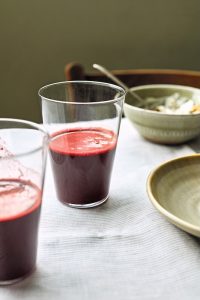
This is an iron and vitamin C powerhouse juice to help you get back your va va voom. Kale, beetroot, parsley and spinach are some of the best sources of non-haem iron and are also high in vitamin C to help its absorption. They are also great sources of magnesium. Beetroot contains nitrates, which convert to nitric acid in the body, and this helps with circulation. It’s a powerful antioxidant too, so your brain will thank you!
SERVES 2
PREP TIME 10 minutes
INGREDIENTS:
2 raw beetroots, washed, trimmed and roughly chopped
6 carrots, roughly chopped
3 kale leaves
20g/¾oz fresh ginger (no need to peel)
25g/1oz fresh parsley
80g/ 3oz baby (or regular) spinach
140g/5oz cucumber, roughly
METHOD:
Pop all the ingredients into your juicer … and juice!
Pour into two glasses and serve.
Image: Laura Edwards
Recipes from The Natural Menopause Method Cookbook by Karen Newby (Pavillion). For more information head to karennewby.com
You might also like:
Nutrition tips every menopausal woman needs
Join the pause. community
We’ve created pause. as a space for women to come together and share stories about their menopause experience, ask questions, and to find support and inspiration. We'll also share the latest news and updates on the menopause from our experts.
Want to be the first to hear our latest news? Join our pause. community today.
Share your email to receive the latest news, updates and information on new products and treatments from My Menopause Centre and our pause. community. You can unsubscribe at any time.
We're committed to protecting and respecting your privacy - see our Privacy Policy and Terms and Conditions

Book a consultation
Whether you want to discuss your symptoms, create a treatment plan that's right for you, understand some test results or have a check-up, the highly experienced doctors and nurses in our menopause clinic are here to help you.
Book nowAs seen in


















Be the first to hear the latest from My Menopause Centre
You can unsubscribe at any time. Terms and Conditions and Privacy Policy.
Follow My Menopause Centre on social
We accept the following payment methods







My Menopause Centre has been registered by the Care Quality Commission under the Health and Social Care Act 2008. Certificate Number: 1-9548280249
My Menopause Centre Limited is a company registered in England and Wales with the number 12586554
© My Menopause Centre 2026
Contact My Menopause Centre
- General enquiries: hello@mymenopausecentre.com
- Book appointments online: Log into your account and go to 'My appointments'
- Book appointments by phone: 0333 444 1067
- Website: https://www.mymenopausecentre.com
We’d love to hear from you
Please ensure you’re logged in to leave a comment. Not got an account – registration is quick and easy! All comments are moderated prior to being posted on the website and are subject to our Acceptable Use Policy.
Comments