Downloaded from www.mymenopausecentre.com
Direct URL: https://www.mymenopausecentre.com/five-mins-five-qs/dani-binnington/
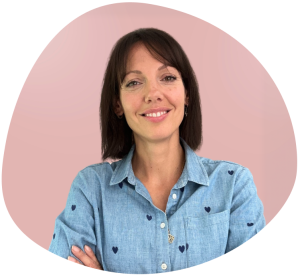
Dani Binnington, cancer survivor, author, and founder of Menopause and Cancer
Dani, now in her mid-40s, was plunged into sudden early menopause after breast cancer treatment and preventative surgery, following a strong family history of ovarian cancer. After struggling to find the support and information she needed, she went on to found Menopause and Cancer, the UK’s only not-for-profit organisation dedicated to supporting people experiencing menopause after cancer. Today, Dani is an author, podcast host, speaker, and campaigner, helping to shine a light on the long-term impact of cancer treatment on hormonal health. Through her work, she supports thousands of survivors globally and educates healthcare professionals through workshops, community programmes, training, and advocacy. She lives in Surrey with her husband Tim and their three teenage daughters.
1. The best thing about the menopause is…
…the incredible community that can come from it.
Over the years, I’ve watched people from all walks of life come together to support one another, share experiences, and push for change. Some of the most inspiring, compassionate, and resilient people I’ve ever met have been through cancer and treatment-induced menopause.
There is something incredibly powerful about finding people who truly understand what you’re navigating. That sense of connection can completely change how alone someone feels, and I honestly believe community is one of the most important parts of healing.
2. The hardest thing about the menopause is….
…realising how unsupported so many people still are.
Despite the huge impact treatment-induced menopause can have on someone’s physical and emotional wellbeing, many people are still leaving treatment with little information, no plan and no real support.
I hear from survivors every single week who describe feeling completely blindsided by what happened to their bodies after cancer treatment ended. Many say the menopause symptoms have affected their quality of life just as much, or even more, than the cancer treatment itself.
For those of us thrown into sudden menopause overnight, it can feel incredibly isolating. And for many cancer patients, the options can feel far more limited and complicated too.
3. My lightbulb moment…
…happened in the weeks after my surgery.
One minute I wasn’t in menopause, and the next I was. Overnight everything changed physically, emotionally, and hormonally, and although I had some understanding of what was happening, I quickly realised most people around me had absolutely no idea what treatment-induced menopause really meant.
The more women I spoke to, the more I realised how many had been left trying to navigate this alone. That became the driving force behind everything I do today.
I wanted to help bridge the gap between cancer care and menopause care, because if we understand what is happening to us and know what support is available, it changes everything.
I still believe one of the most important things we can do is ask questions and advocate for ourselves. If you are being given a blanket “no,” it’s important to understand why. We all deserve personalised conversations around risk, benefit, and quality of life so that we can make informed decisions about our own bodies and futures.
4. My self-care superheroes are…
…connection, movement, and honesty.
Connection and community remain huge for me. Finding people who understand your experience can make an enormous difference, especially after cancer when menopause can feel like such a different experience to the mainstream conversation.
Movement is also incredibly important for me, not from a place of pressure, but from a place of support. Exercise, walking, yoga, and strength training have all helped me reconnect with my body over the years and support my mental health too.
And finally, honesty. Being honest about how you’re feeling, what you’re struggling with and what you need support with can be incredibly freeing. We spend so much time trying to hold everything together after cancer, but healing often begins when we stop pretending we’re fine.
5. I couldn’t live without…
…my yoga practice and the communities I’ve built around me.
Yoga has supported me through some of the hardest periods of my life. It helps calm my anxiety, reconnect me to my body, and create moments of stillness when life feels overwhelming.
But alongside that, I honestly couldn’t live without the incredible people in my life and the wider Menopause and Cancer community. What started from one very lonely experience has now become something so much bigger, a movement filled with support, education, compassion, and hope.
For more information about Dani’s work, her book Navigating Menopause After Cancer, and support for people navigating menopause after cancer, visit Menopause and Cancer or follow Dani on Instagram at @menopause and cancer
Book a consultation
Whether you want to discuss your symptoms, create a treatment plan that's right for you, understand some test results or have a check-up, the highly experienced doctors and nurses in our menopause clinic are here to help you.
Book nowAs seen in

















Be the first to hear the latest from My Menopause Centre
You can unsubscribe at any time. Terms and Conditions and Privacy Policy.
Follow My Menopause Centre on social
We accept the following payment methods







My Menopause Centre has been registered by the Care Quality Commission under the Health and Social Care Act 2008. Certificate Number: 1-9548280249
My Menopause Centre Limited is a company registered in England and Wales with the number 12586554
© My Menopause Centre 2026
Contact My Menopause Centre
- General enquiries: hello@mymenopausecentre.com
- Book appointments online: Log into your account and go to 'My appointments'
- Book appointments by phone: 0333 444 1067
- Website: https://www.mymenopausecentre.com